L’IA au service de la recherche financière
Posez une question à Archivist et obtenez des réponses fondées sur les documents déposés auprès des bourses du monde entier.
Comment ça fonctionne
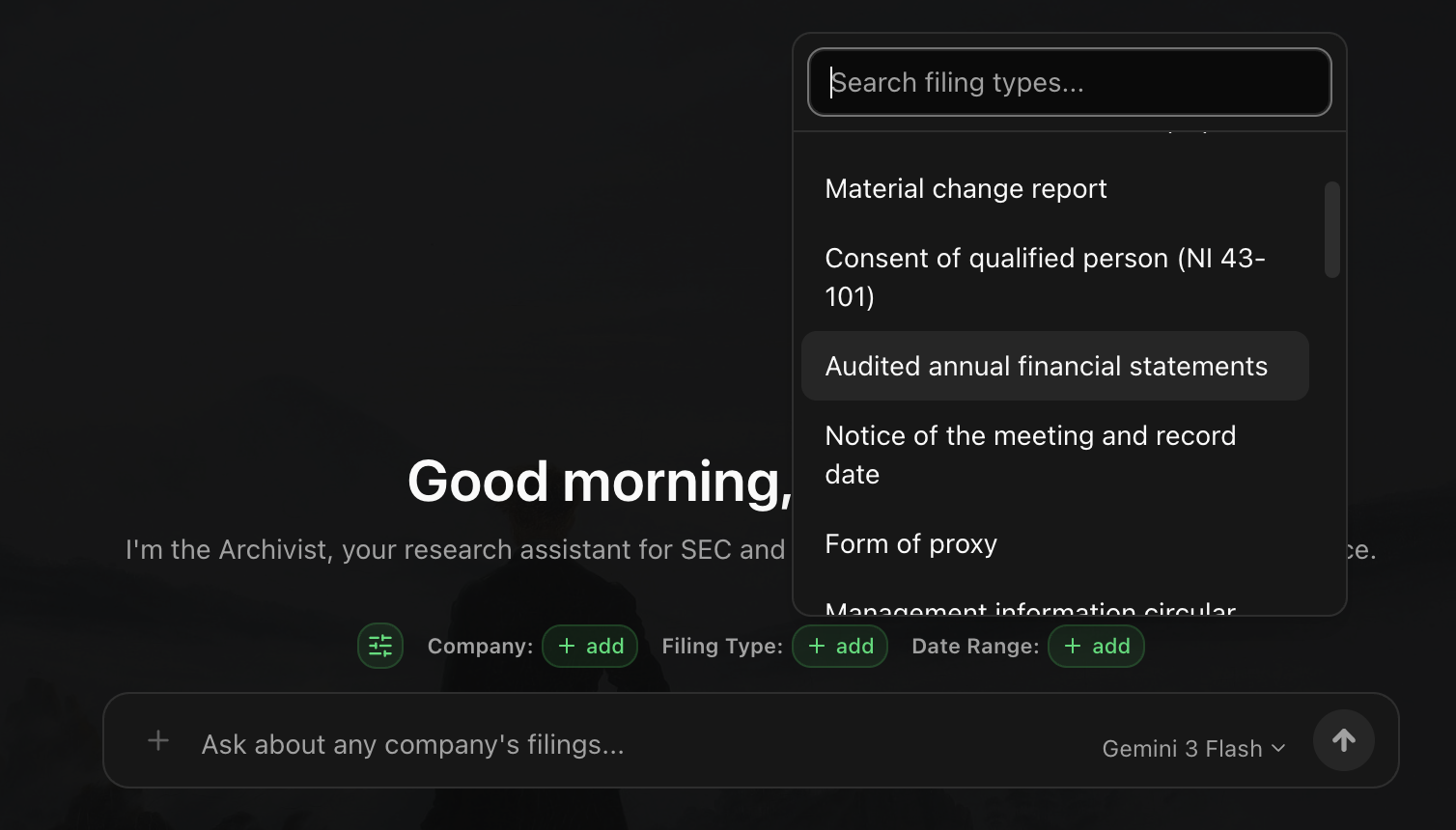
Demander
Tapez une question sur n’importe quelle société cotée en bourse en langage naturel. Ajoutez des filtres selon vos préférences ou non; Archivist s’en chargera.
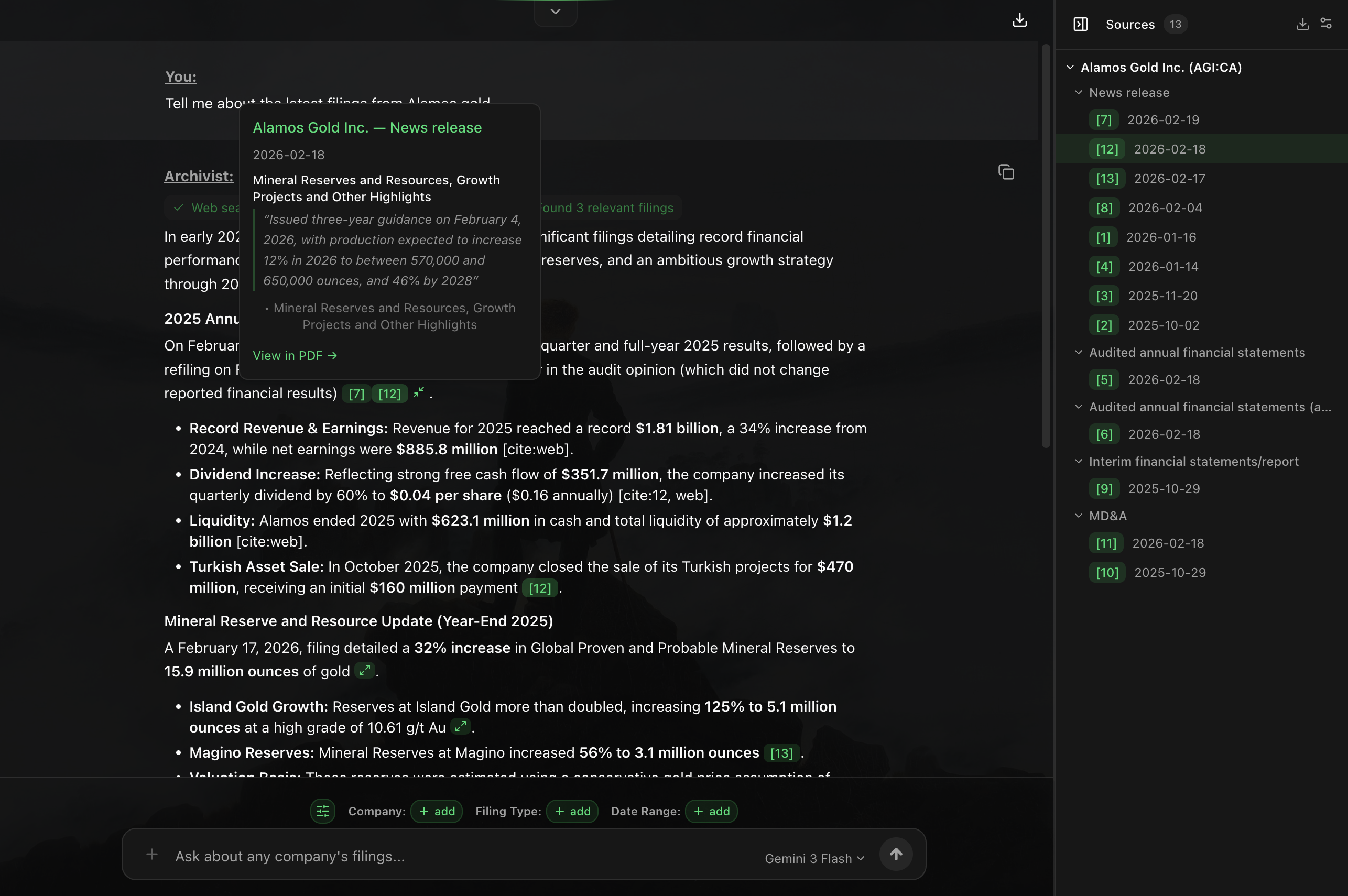
Obtenir des réponses avec sources
Chaque réponse est accompagnée de balises de référence renvoyant à la source exacte. Passez la souris sur n’importe quelle balise pour prévisualiser le passage, cliquez pour ouvrir le document.
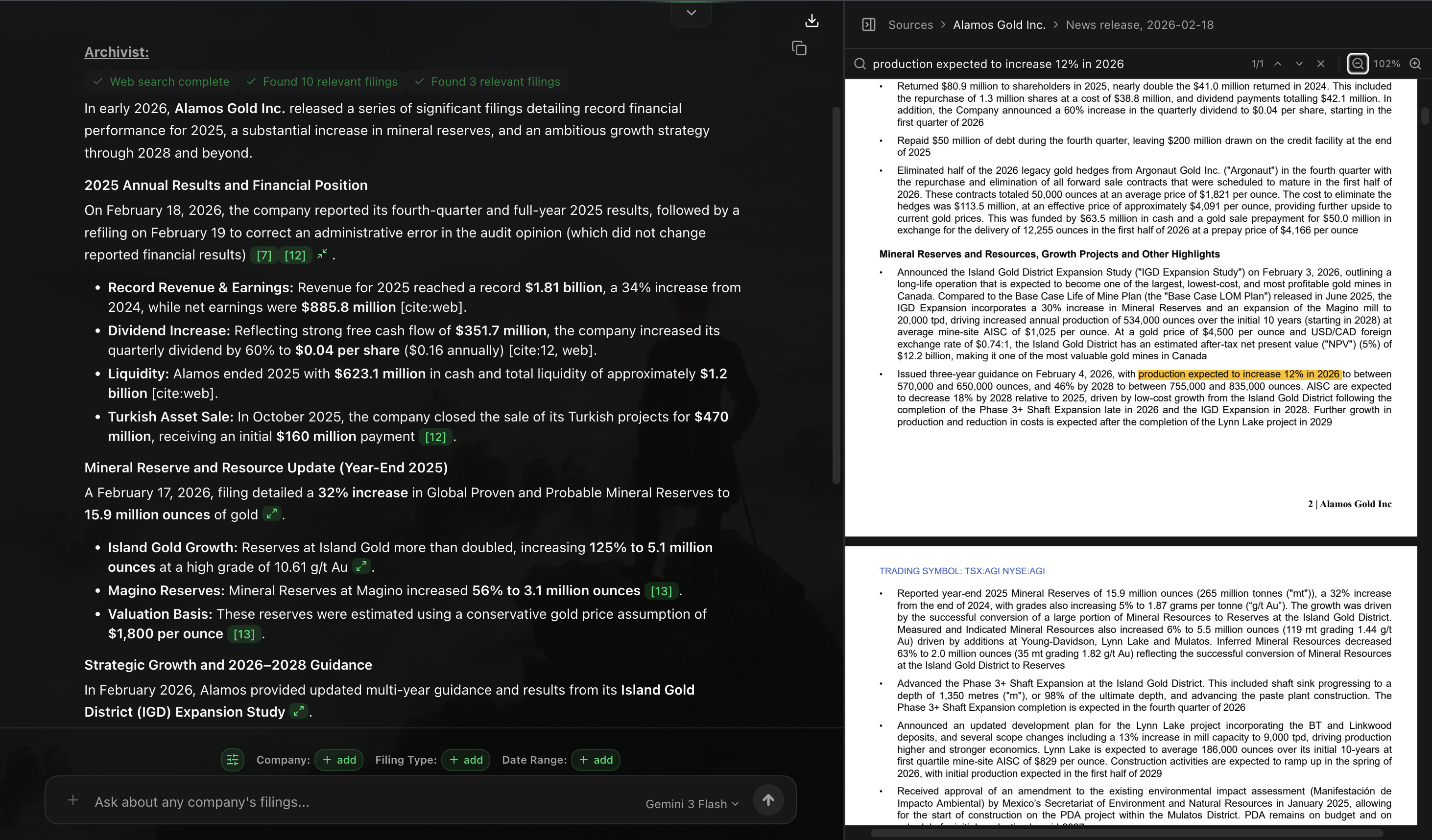
Vérifier
Cliquez sur n’importe quelle référence pour ouvrir le document original. Le visionneur PDF met en évidence la section exacte afin que vous puissiez vérifier chaque affirmation par rapport au document source.
Il y a encore bien d’autres choses à découvrir. Lancez-vous avec vos 10 premières requêtes offertes.
Derrière l’architecture
Nous parlons de ce que nous développons dans notre blogue. La transparence est notre produit.

A comprehensive overview of common AI misconceptions and the factual realities that should guide engineering decisions.

The math on autonomous agents is brutal. Chain 10 steps at 95% accuracy each and your total success rate is 60%. The hype ignores exponential decay.

If your system breaks because you changed an adjective, the problem isn't your prompt; it's your architecture. The mature approach is System Engineering.

Fine-tuning is effective for teaching form but terrible for injecting facts. The 'domain-specific fine-tuned model' pitch is mostly marketing.

Million-token context windows sound impressive. The reality: models struggle to retrieve information buried in the middle of long prompts.

The 'blackbox' narrative is convenient but wrong. AI models are sequences of math operations. Control the arithmetic, control the output.

LLMs predict the next token. That's it. They've mastered linguistic form without possessing communicative intent.

If code can do it, code should do it. There's a concerning number of AI automations that shouldn't be AI automations.

The industry conflates 'bigger' with 'better.' This ignores basic math. Running a cheaper model multiple times beats expensive single passes.
A comprehensive overview of common AI misconceptions and the factual realities that should guide engineering decisions.
The math on autonomous agents is brutal. Chain 10 steps at 95% accuracy each and your total success rate is 60%. The hype ignores exponential decay.
If your system breaks because you changed an adjective, the problem isn't your prompt; it's your architecture. The mature approach is System Engineering.
Fine-tuning is effective for teaching form but terrible for injecting facts. The 'domain-specific fine-tuned model' pitch is mostly marketing.
Million-token context windows sound impressive. The reality: models struggle to retrieve information buried in the middle of long prompts.
The 'blackbox' narrative is convenient but wrong. AI models are sequences of math operations. Control the arithmetic, control the output.
LLMs predict the next token. That's it. They've mastered linguistic form without possessing communicative intent.
If code can do it, code should do it. There's a concerning number of AI automations that shouldn't be AI automations.
The industry conflates 'bigger' with 'better.' This ignores basic math. Running a cheaper model multiple times beats expensive single passes.
Foire aux questions
Trouvez des réponses à vos questions sur nos produits, la facturation et la couverture des données.